BUSINESS ETHICS
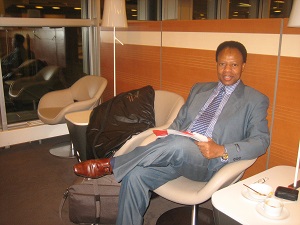
Nov.2013: Bernard Nyembo at Cointrin Airport, on his way to the World Bank in Washington, DC.
INFORMATION ON COMPLIANCE IS RESTRICTED and available to our shareholders only.
We provide a summary below.
COMPLIANCE
We will not violate any rule of law regarding compliance. We are aware of legal sanctions as a result of internal risks: regulatory, bank reserves, good reputation, adherence to laws, and standard practice.
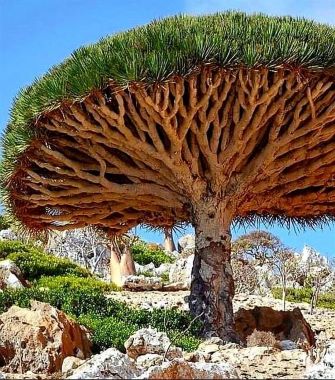
Dracaena cinnabari, the Socotra dragon tree or dragon blood tree, is a dragon tree native to the Socotra archipelago, part of Yemen, located in the Arabian Sea. It is so named due to the red sap that the trees produce.
The dragon blood tree has a unique and strange appearance, with an "upturned, densely packed crown having the shape of an uprightly held umbrella." Its leaves are found only at the ends of its youngest branches; its leaves are all shed every 3 or 4 years before new leaves simultaneously mature. Branching tends to occur when the growth of the terminal bud is stopped, due to either flowering or traumatic events (e.g., herbivory). Its fruits are small, fleshy berries containing between 1 and 4 seeds. As they develop, they turn from green to black and then become orange when ripe.
The dragon blood tree has a unique and strange appearance, with an "upturned, densely packed crown having the shape of an uprightly held umbrella". Its leaves are found only at the end of its youngest branches; its leaves are all shed every 3 or 4 years before new leaves simultaneously mature. Branching tends to occur when the growth of the terminal bud is stopped, due to either flowering or traumatic events (e.g. herbivory). Its fruits are small fleshy berries containing between 1 and 4 seeds. As they develop they turn from green to black, and then become orange when ripe.
PLANNING AHEAD
We consider ourselves to be an innovative company. Finma must accredit our asset managers and our trustees in accordance with the regulations governing financial companies before operating our special division in Switzerland (LEFin and LSFin).
• FINMA is the abbreviation for Eidgenössische Finanzmarktaufsicht, a body that oversees banking and financial activities in Switzerland. We foresee the critical factors that drive success, including addressing climate change to affect agricultural foresight, planning, and proactive action. It entails having the capacity to accurately appraise any circumstance, act in unison to address the difficulties of remote work, and maintain contact with our stakeholders and future clients.
Agility, flexibility, and dynamism akin to cats Every crisis presents a chance for improvement. New patterns are quickly identified by us, and we we adapt to them.
TOO SMALL TO WIN VS TOO BIG TO FALL.
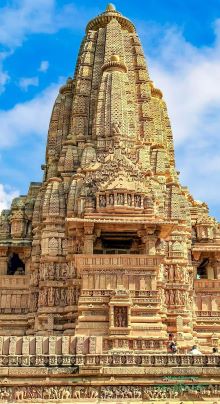
Lackshmana, India (954 AD).
When giants fall, it's the peasants who get squashed.
What is the success driver for Amazon, Google, Twitter, Alibaba, Samsonite, Samsung, Apple, McD's, PepsiCo, and many others?
How about the opposite: companies like Reebok, Nokia, Enron, PanAm, Kodak, etc., to name but a few?
Here are some typical examples: What happened to big companies like Fannie Mae and Freddie Mac?
In the fall of 2007, Freddie Mac shocked the market by announcing large credit-related losses, fueling the fire for the argument that the two companies posed a tremendous risk to the entire financial system. They were involved in toxic transactions called mortgage-backed securities (MBSs).
The main lesson learned is that profit-driven companies with a public mission like Fannie Mae and Freddie Mac believe that they cannot fail. Make no mistake: Fannie Mae and Freddie Mac are driven by profits that their shareholders demand. While fulfilling their public mission, they make their profit in two primary ways: guaranteed fee income and retained portfolios.
(Please read Fannie Mae and Freddie Mac, Boon or Boom? (By Barry Nielsen on April 24, 2014.)
